

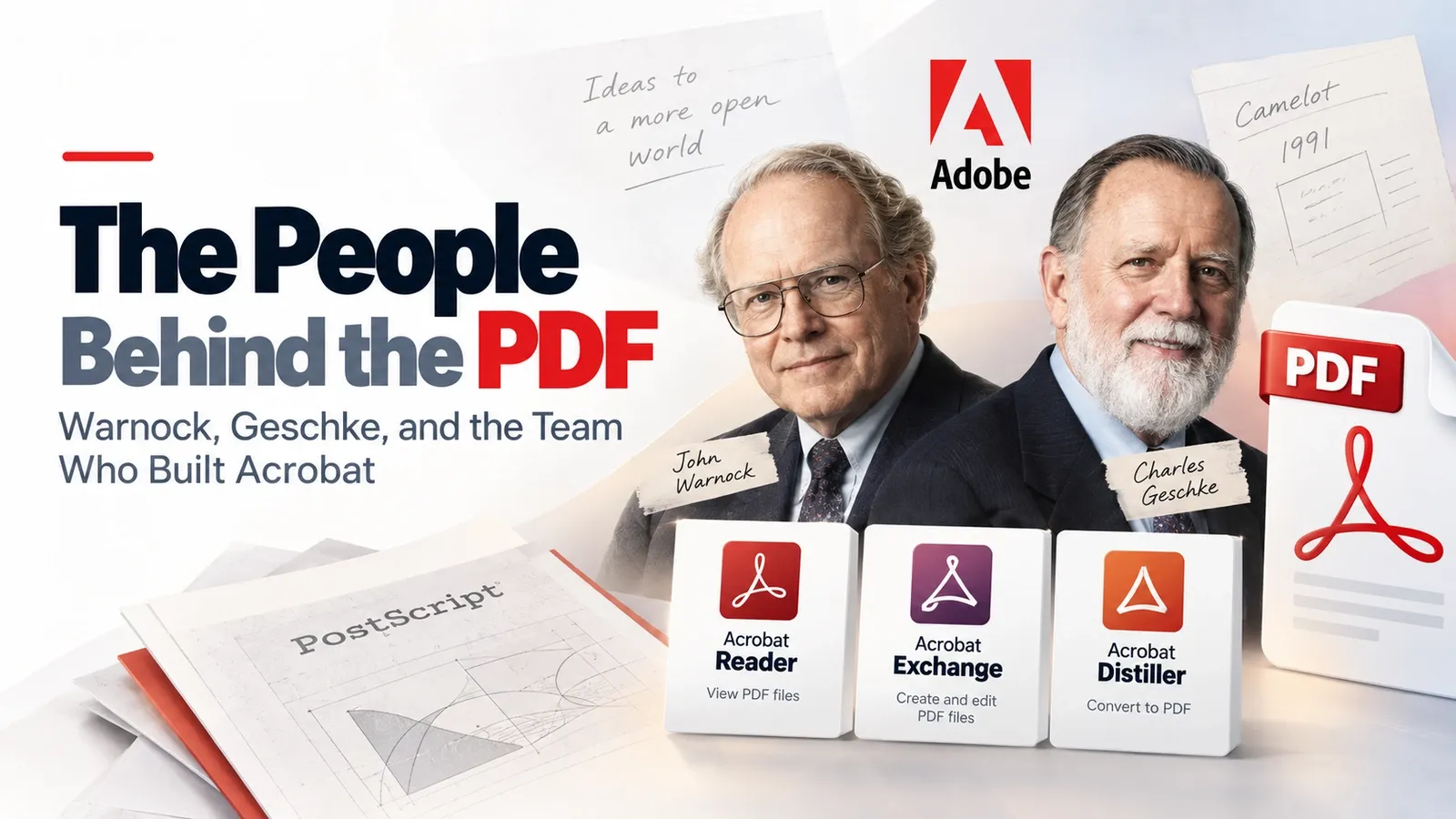
The history of Acrobat starts with John Warnock, Charles Geschke, the Adobe team, and the engineers who turned a document-sharing idea into working software.
PDF was not made by one person in one moment. Warnock helped create the vision, Geschke helped build the company and the PostScript foundation behind it. Finally, Adobe’s Acrobat engineers turned that vision into tools people could actually use.
The cleanest way to understand the story is to keep three groups separate. Warnock and Geschke were the visionaries. The Acrobat engineers were the builders. Steve Jobs was an outside catalyst who helped make PostScript commercially important, but he did not build PDF or Acrobat.
That distinction matters because many “who made PDF?” explanations blur the roles together. The founders imagined the future of portable documents, the engineers built the original Acrobat product line, and outside partners helped create the market conditions that made the format possible.
This article explains who John Warnock and Charles Geschke were, why the company is called Adobe, who the Acrobat engineers were, and Steve Jobs' real connection to Adobe and PDF. It also covers how Acrobat grew as a product and who maintains the PDF standard today.
Who Is John Warnock?
John Warnock was an Adobe co-founder who co-created PostScript and personally wrote the 1991 Camelot memo. This proposal became the foundation for PDF and Acrobat.
Before Adobe, Warnock worked at Xerox PARC, where he was involved with advanced document and printing ideas. That background mattered because PARC was one of the places where page-description and digital document concepts were being explored before Adobe turned them into commercial products.
Warnock’s biggest role in the PDF story was not only technical. He was the visionary who saw that documents should be shareable across computers, operating systems, and printers without losing their original page appearance.
The key primary-source detail is the Camelot memo itself. Instead of saying only that Adobe invented PDF, it is more accurate to say that Warnock wrote the Camelot memo, and Adobe’s team later turned that idea into Acrobat and the PDF format.
Who Is Charles Geschke?
Charles Geschke was an Adobe co-founder who started the company with John Warnock and co-created PostScript, the page-description language the PDF later grew from.
Before Adobe, Geschke and Warnock both worked at Xerox PARC, where they were involved with Interpress, an advanced printing and document-description system. That work gave them the technical foundation for thinking about pages as precise, device-readable instructions.
The turning point came when Xerox PARC did not commercialise their Interpress work in the way they wanted. Geschke and Warnock believed the technology had real product potential, so they left Xerox and founded Adobe to bring that kind of page-description system to market themselves.
Geschke’s role in the Acrobat and PDF story is tied to that founding partnership. Warnock is often remembered for the Camelot memo, but Geschke helped build the company and the PostScript business that made Acrobat possible later.
Why Is It Called Adobe?
Adobe is the company name because it was named after Adobe Creek, which ran behind John Warnock’s home in Los Altos, California.
The name gives the Acrobat and PDF story a more human origin. Before Adobe became known for PostScript, Acrobat, Photoshop, and PDF, its name came from a real place connected to one of its founders.
That small detail ties the company back to Warnock directly. The same person who later wrote the Camelot memo lived near the creek that gave Adobe its name.
So the maker of Acrobat and PDF was not named after a technical term, a file format, or a printing language. It was named after Adobe Creek, a local landmark behind John Warnock’s house.
Who Were the Engineers Who Built Acrobat and PDF?
Beyond the founders, the Acrobat engineers were the Adobe builders who turned the Camelot idea into three original Acrobat tools: Reader, Exchange, and Distiller.
That work was not one single engineering task. Reader focused on viewing PDF files, so people could open and read portable documents on different computers. Exchange handled the authoring and editing side, giving users a way to work with PDF files beyond simply viewing them. Distiller handled the PostScript conversion path, turning PostScript output into PDF.
Those three tools show how much work sat behind the original PDF launch. The Camelot team had to take Warnock’s portable-document vision and turn it into software that could display pages, manage files, preserve layout, and convert print-oriented data into a shareable format.
That is why the Acrobat story should credit the builders, not only the founders. Warnock and Geschke created the company and the vision, but the engineering teams made Acrobat usable as a product.
The early Acrobat system was really a set of connected tools built by separate efforts. Reader made PDF viewable, Exchange made it workable, and Distiller made the PostScript-to-PDF bridge practical.
What Was Steve Jobs' Connection to Adobe and PDF?
Steve Jobs was an outside catalyst in the Adobe and PDF story, not a PDF creator. In 1985, Apple licensed Adobe’s PostScript for the Apple LaserWriter, which helped launch desktop publishing and gave Adobe the commercial success that later made Acrobat possible.
The LaserWriter deal mattered because it put PostScript inside a real product at the right time. Designers, publishers, and businesses could create pages on a computer and print them with far more precision than before. That made PostScript valuable, and it helped Adobe grow from a technical startup into a major software company.
Jobs also stayed connected to PostScript later through NeXT. NeXT used Display PostScript to bring PostScript-style imaging to the screen, showing how important Adobe’s page technology had become beyond printers.
But Jobs did not build PDF, write the Camelot memo, or create Acrobat. His role was different: he helped make PostScript a commercial success, and that success funded and strengthened the company that later built PDF.
So the myth needs a clear correction. Jobs helped create the market conditions around Adobe’s early technology, but the PDF itself came from Warnock’s Camelot vision and Adobe’s Acrobat engineering work.
How Did the Acrobat Product Line Evolve?
Acrobat 1.0 launched in 1993 as Adobe’s first product line for creating, viewing, and converting PDF files. The major turning point came when Adobe made Acrobat Reader free in 1994, which helped PDF spread far beyond early paid users.
That decision mattered as much as the technology. A portable document format only becomes useful when people can open the file without friction. By giving Reader away, Adobe made it easier for businesses, publishers, governments, and everyday users to receive and view PDFs without buying the full Acrobat package.
After that, Acrobat grew with the needs of real document work. PDF became more than a static page format as Acrobat added stronger support for forms, allowing users to fill in information instead of only reading a finished document.
Later versions also pushed PDF into trusted workflows through signatures. Signed PDFs made the format more useful for contracts, approvals, official documents, and business processes where identity and document integrity mattered.
The product line kept changing as PDF became a standard part of digital work. Today’s Acrobat DC reflects that long shift: Acrobat moved from a small set of desktop tools into a broader document platform for viewing, editing, signing, sharing, and managing PDFs.
So Acrobat’s history is not only about file-format features. Its success also came from a people-decision: Adobe’s leaders chose to make Reader free in 1994, and that choice helped carry PDF from a technical idea into a format almost everyone could open.
Who Maintains the PDF Standard Today?
Today, the PDF standard is maintained by ISO TC 171 SC 2, a volunteer committee of international experts, not by Adobe’s original Acrobat team.
That makes the modern PDF story a human handoff. The format began inside Adobe, but its long-term direction now depends on standards experts, implementers, accessibility specialists, archivists, and document-technology professionals who work through the ISO process.
The PDF Association also plays an important coordinating role around the wider PDF community. It brings together people and organizations involved in PDF standards, software, accessibility, archiving, print, and long-term document reliability.
So the current maintainers are not the same people who built the first Acrobat tools. Adobe employees helped create the original format, but today’s PDF standard is shaped by a broader international group.
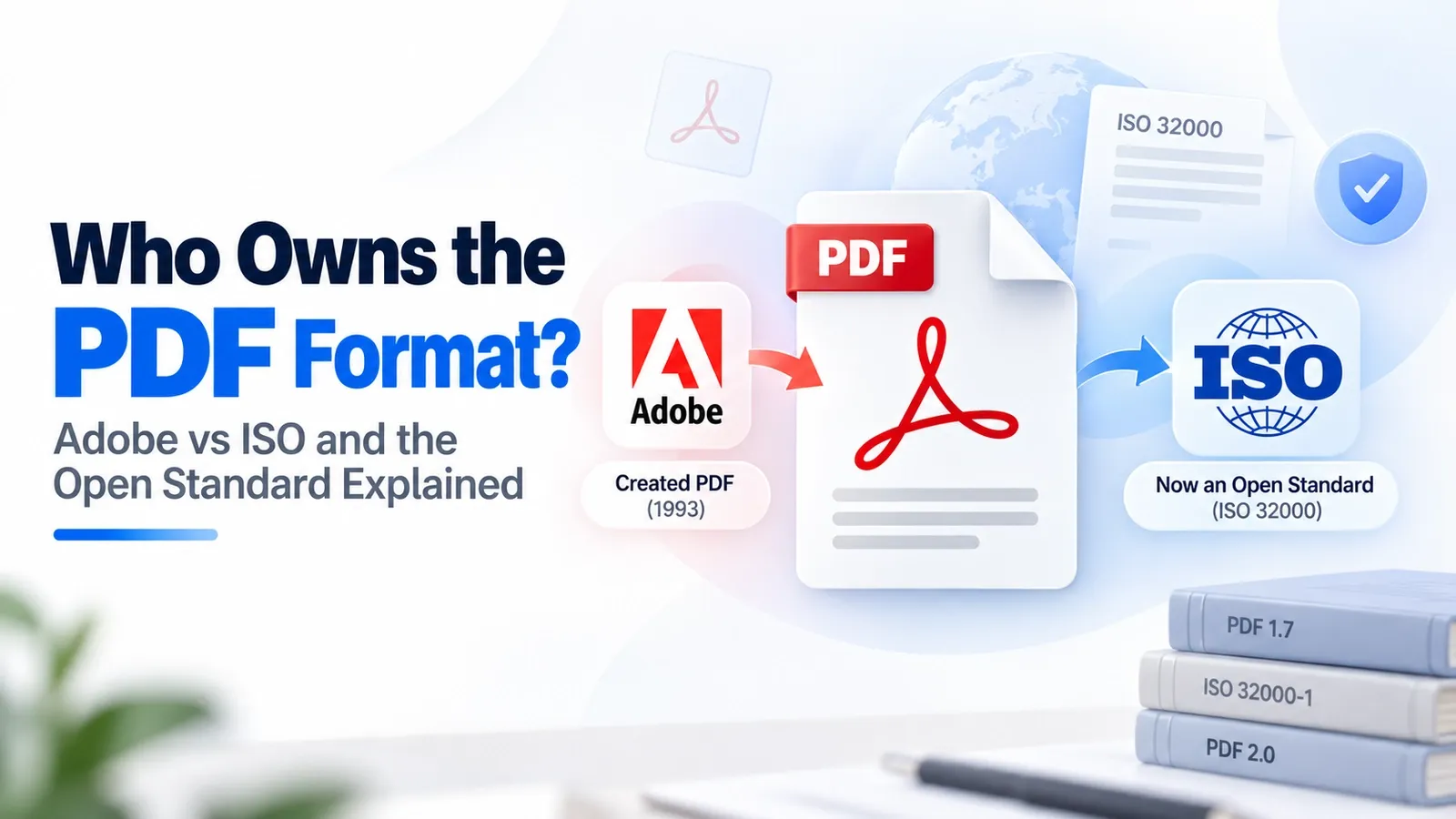
The ownership side belongs in the who-owns guide. For this people-focused history, the main point is the handoff: PDF moved from Adobe’s original staff to a global standards community that keeps the format usable across software, industries, and decades.
What Is the Full History of PDF?
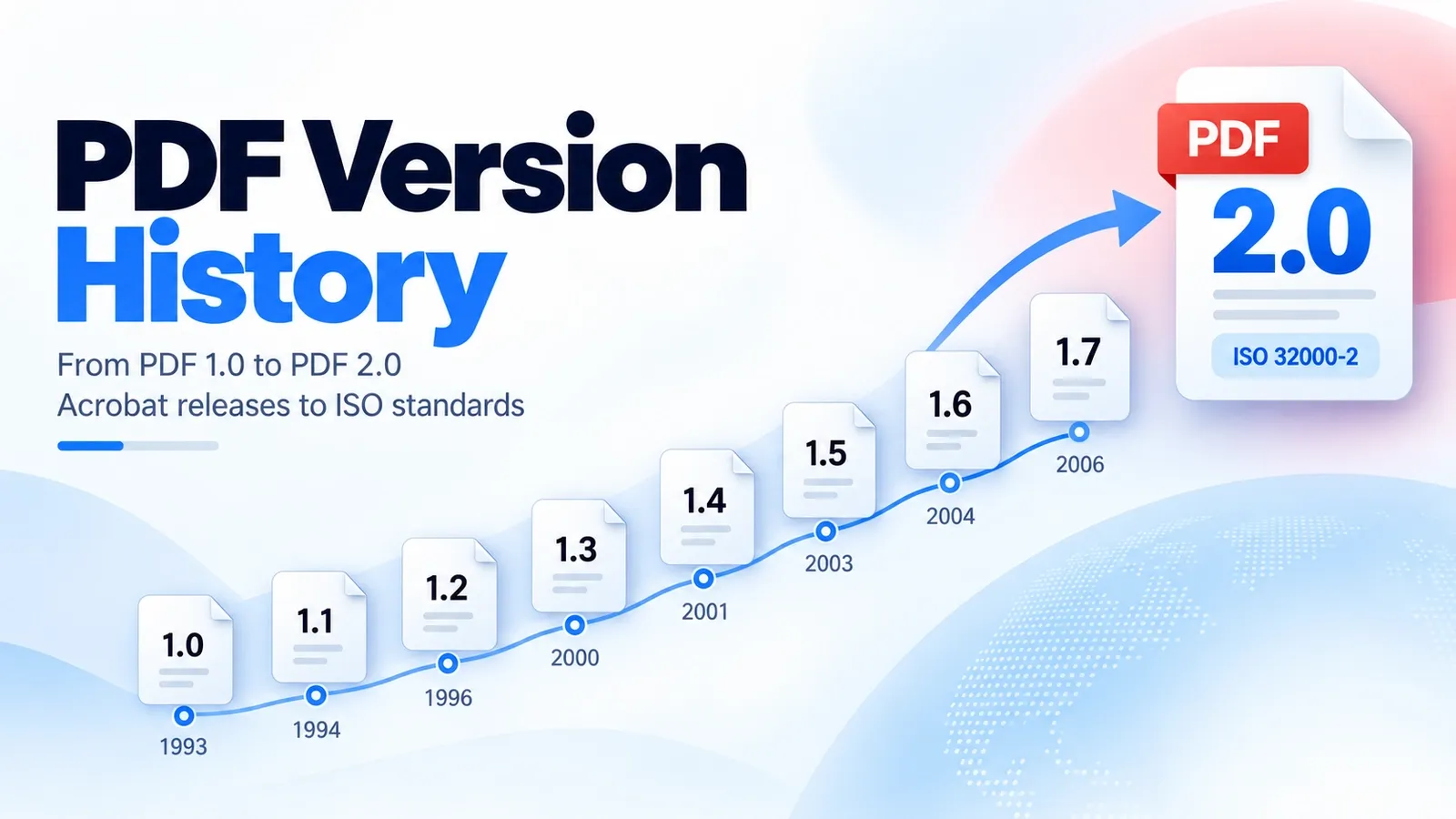
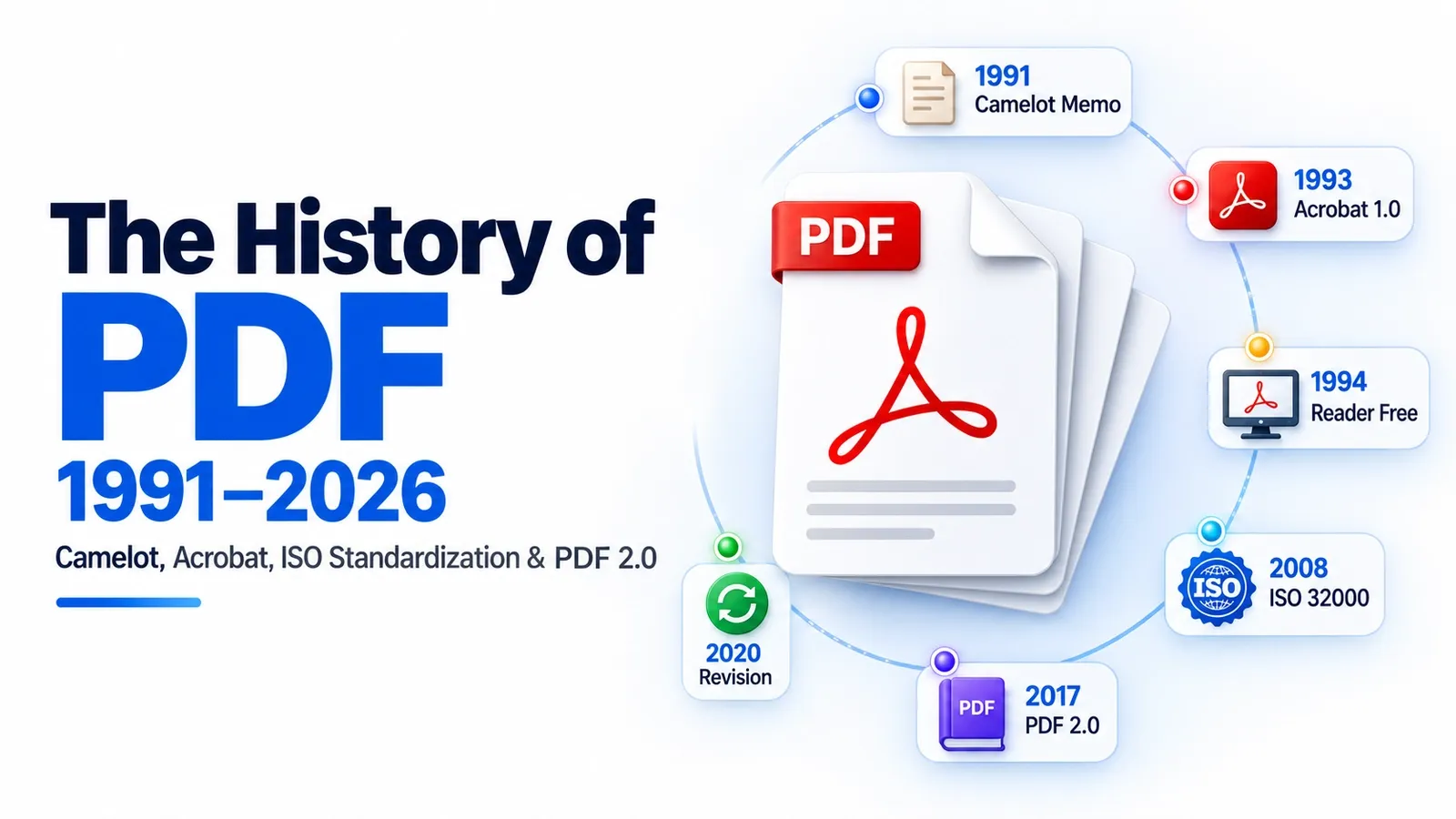
The people behind Acrobat are one thread of the wider PDF history; the full timeline runs from Warnock’s Camelot idea to Acrobat, ISO standardization, and PDF 2.0.
For the complete story, read the history of the PDF, where the full path from Adobe’s early document vision to the modern PDF standard is explained in order.
How Did PostScript Lead to PDF?
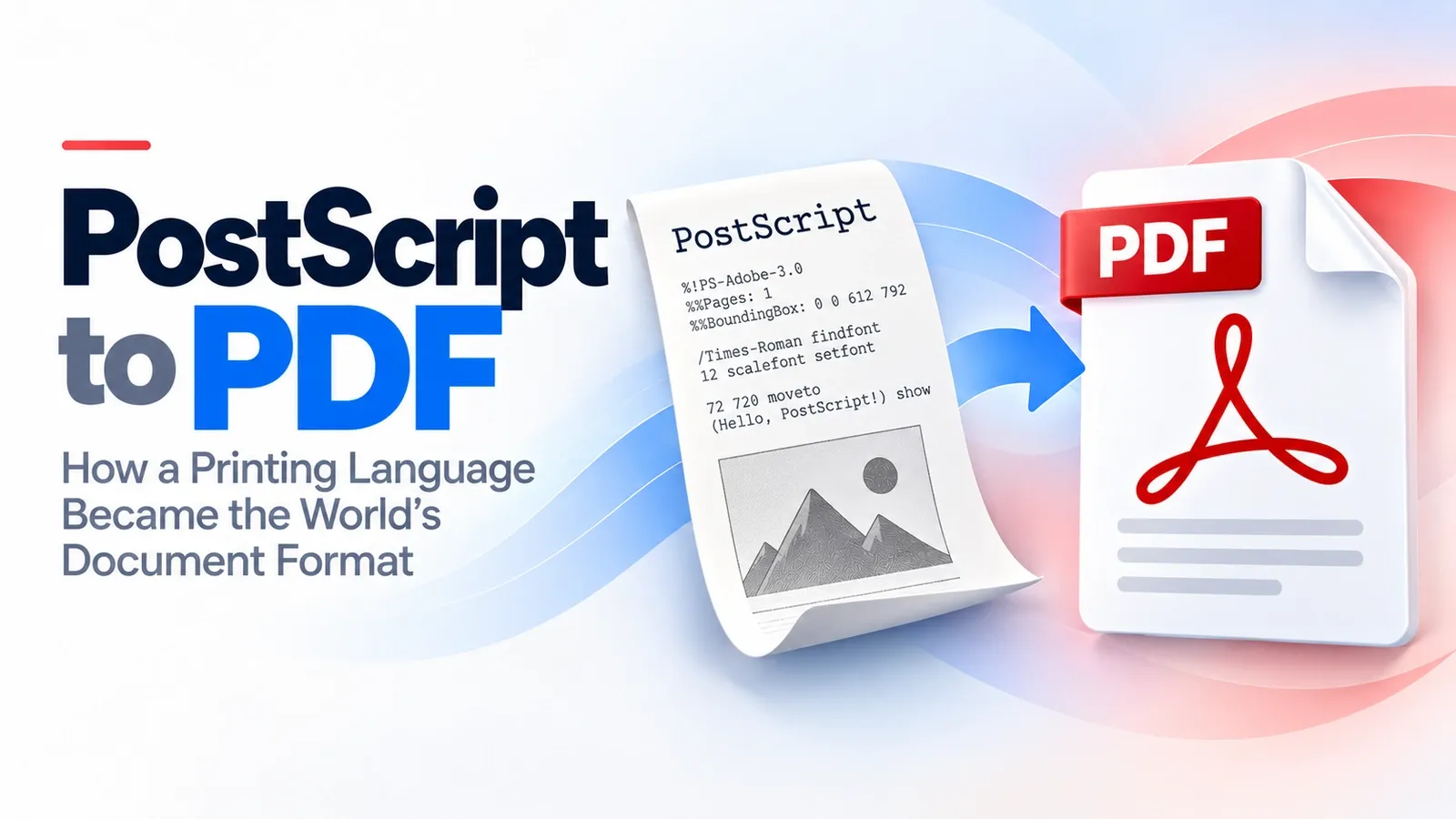
The founders’ earlier language, PostScript, was the system Adobe used as the technical starting point for PDF; the deeper origin is covered in its own guide.
For the full connection, read PostScript to PDF, where the path from a printer language to a portable document format is explained in detail.