

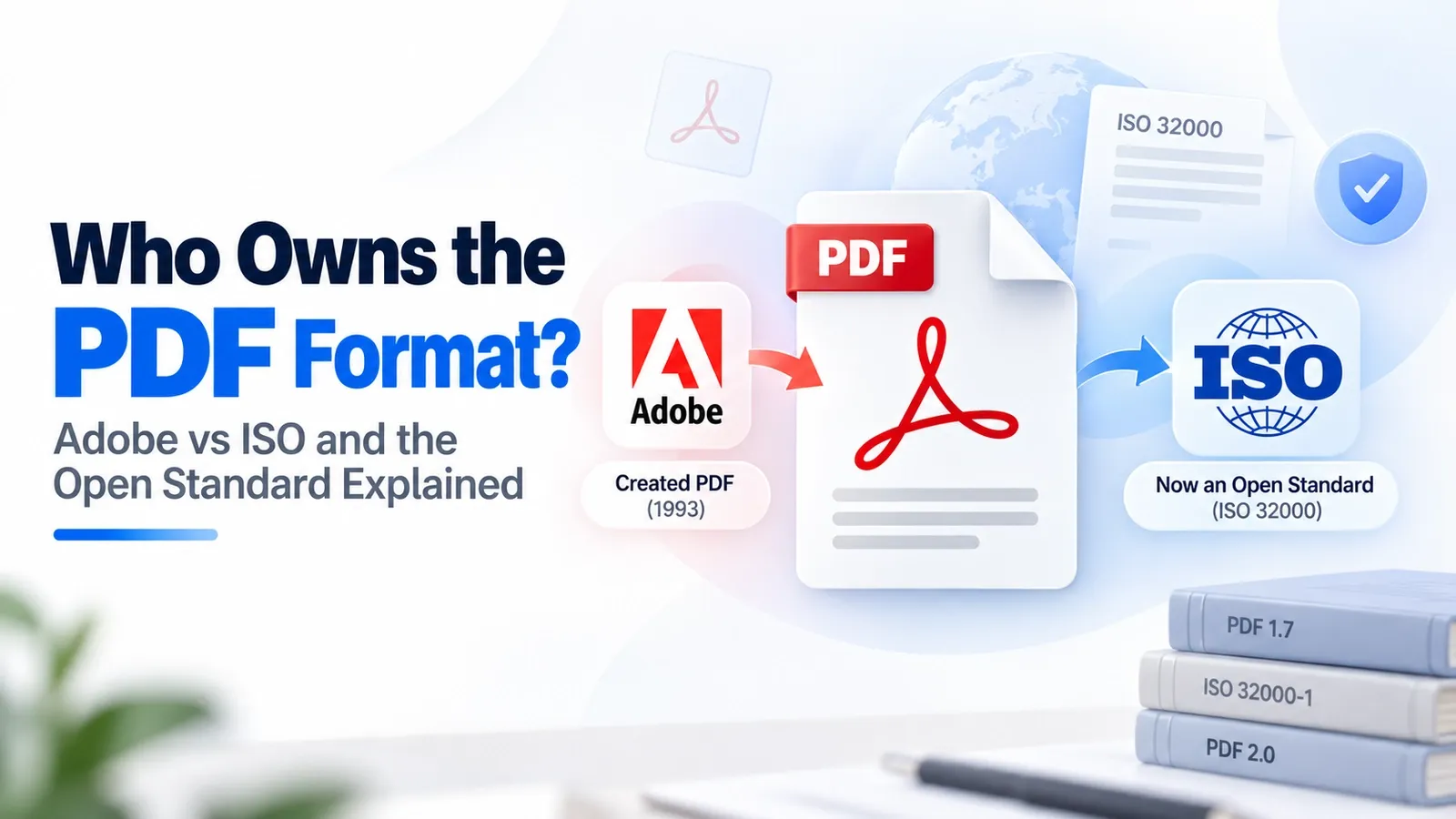
There is no single owner of the PDF format today. PDF is no longer controlled by one company in the way many people assume.
The ownership story is about control passing from Adobe to ISO. Adobe created the format and controlled its early direction, but the PDF standard now sits under ISO 32000 as an open standard. The exact working group behind the core PDF specification is ISO TC 171 SC 2 WG8, with the PDF Association acting as the committee manager.
This distinction matters because owning the PDF standard is not the same as owning a PDF product. Adobe still owns Acrobat as a product family and controls the Acrobat trademark, but that does not mean Adobe privately owns the PDF format today.
This article explains who owns the PDF format today, whether Adobe originally owned it, why Adobe gave control away, how PDF became an open standard, how ISO TC 171 manages it now, what Adobe still controls, and whether PDF is still proprietary.
Who Owns the PDF Format Today?
No single company owns the PDF format today because it is an open standard defined by ISO 32000. The standard is maintained through the International Organization for Standardization (ISO), with ISO TC 171 SC 2 WG 8 overseeing the technical work and the PDF Association serving as the committee manager. This governance model allows the specification to evolve through an international standards process rather than under one company's control.
Owning the PDF standard is different from owning software built on it. Adobe created PDF and still owns the Acrobat product family and the Acrobat trademark, but it does not own the PDF format itself. The standard defines how PDF files should work, while Acrobat is one implementation of that standard.
Because PDF is an open standard, developers can build PDF readers, editors, validators, converters, and other tools without owning or licensing the format itself. This open, vendor-neutral approach is one reason PDF has remained widely supported across different software vendors, industries, and platforms.
Did Adobe Originally Own the PDF Format?
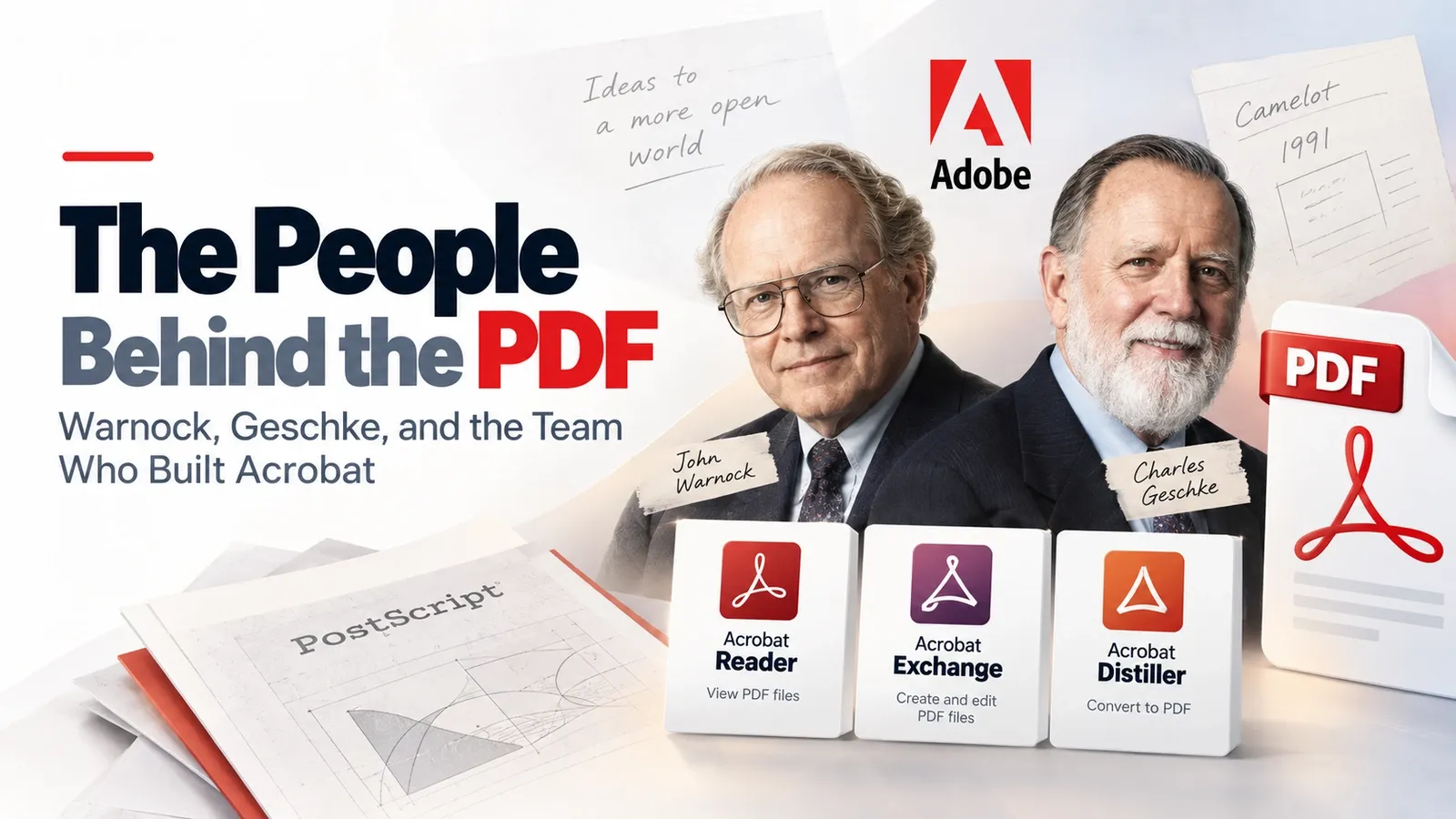
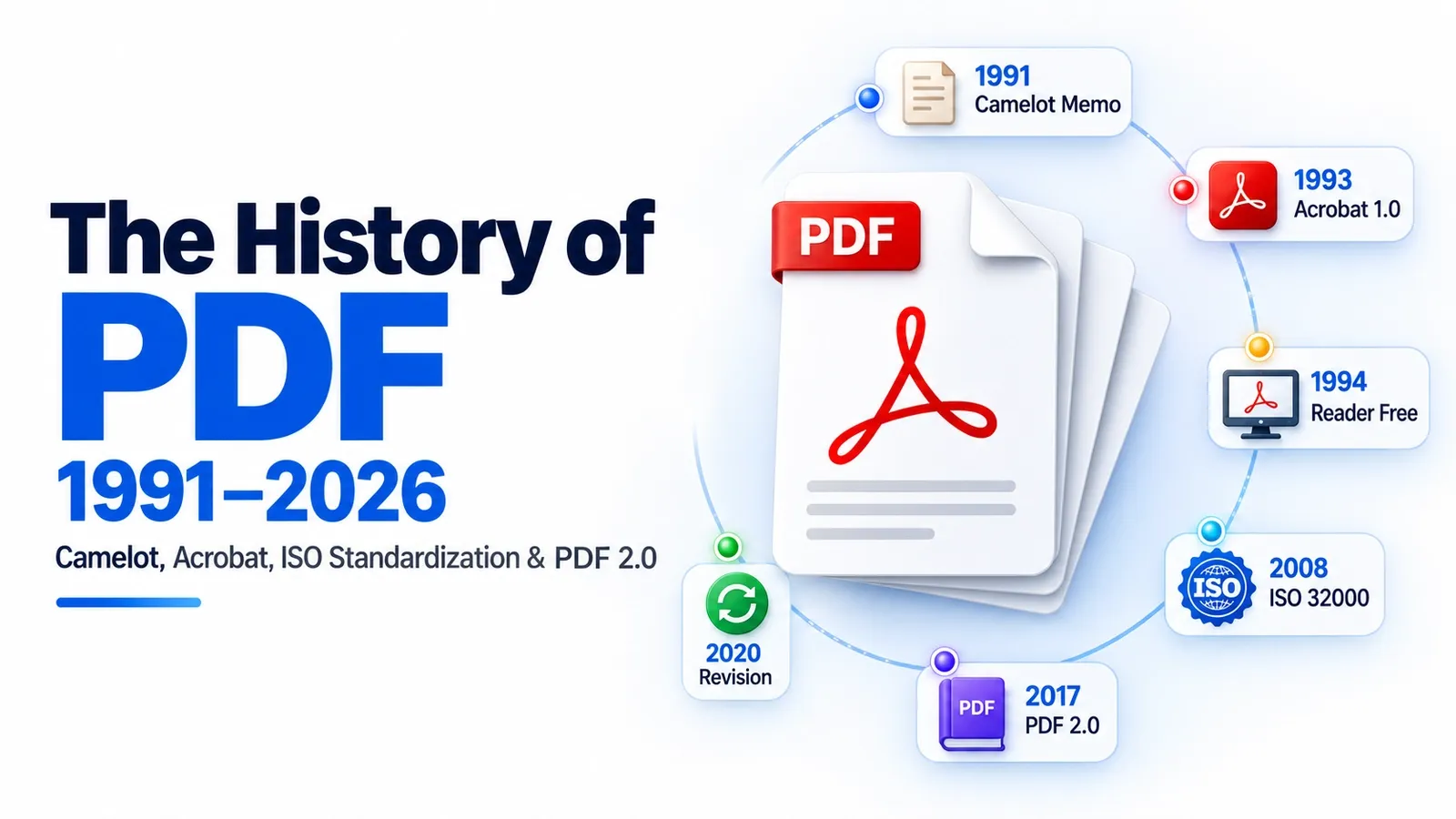
Yes. Adobe created the PDF in 1993 and kept it under its control as a proprietary format until 2008, even though it made the PDF specification available for others to read during those years.
That is the important distinction: proprietary did not mean secret. Developers, software companies, and printer vendors could study the published specification and build PDF support into their own tools.
The control, however, stayed with Adobe. Adobe decided which features were added, how new PDF versions worked, and what direction the format took before the ISO handoff.
So Adobe originally owned the PDF format in the control sense. The specification was public enough to help PDF spread, but Adobe still controlled changes until PDF moved into ISO standardization in 2008.
Why Did Adobe Give the PDF Away?
Adobe gave control of PDF to ISO to reduce vendor lock-in fears, answer growing criticism, and help PDF become a trusted universal standard instead of a format controlled by one company.
By the late 1990s, PDF was already spreading, but Adobe was still both writing the specification and selling Acrobat-based tools around it. One complaint was that some advanced features depended on paid certificates or Adobe-controlled access, which made people worry that important parts of the format could stay tied to Adobe’s business model.
That is why certificate-gated features became more than a product concern. If Adobe alone controlled what counted as PDF, then governments, archives, software vendors, and businesses had to trust one company with a format they were starting to use for long-term records.
Handing PDF to ISO changed the stewardship model. It gave the format a neutral standards home, reduced fear around long-term control, and made PDF easier for competing software companies, public institutions, and document workflows to adopt with confidence.
The business case also made sense for Adobe. A more trusted PDF standard helped the format spread further, while Adobe could still sell Acrobat and related products around the open document ecosystem.
How Did PDF Become an Open Standard?
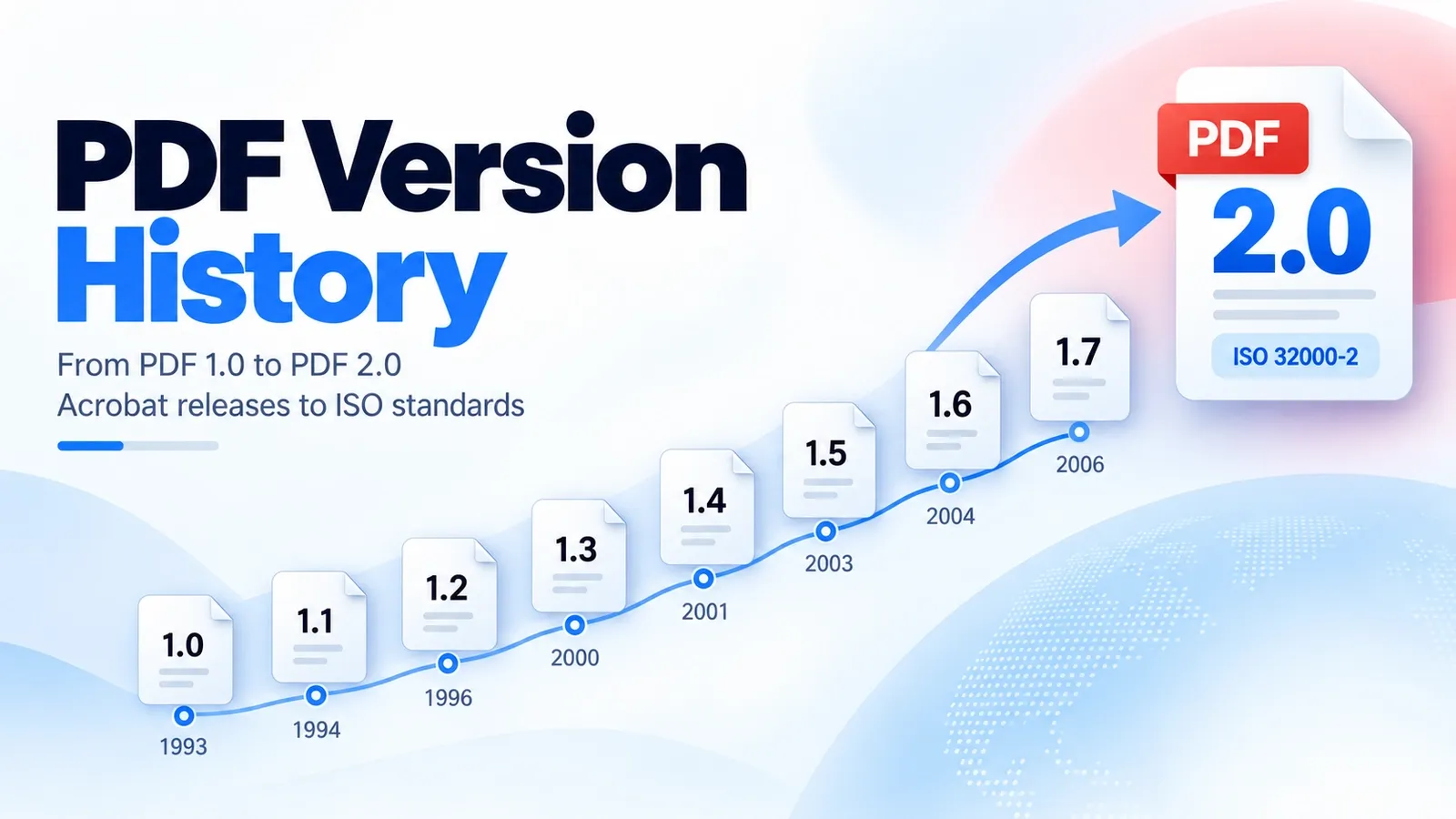
PDF became an open standard when Adobe submitted PDF 1.7 to ISO, and the specification was published as ISO 32000-1 on July 1 2008.
The handoff changed PDF from an Adobe-controlled specification into an international standard. But the legal step mattered too. Adobe’s public patent license gave implementers royalty-free rights to use the necessary PDF patents for compliant implementations.
That is what made “open” practical, not just symbolic. The specification was no longer only something people could read; it became a standard that software vendors could implement with clearer legal confidence.
The details of what ISO 32000 contains belong in a separate standards guide. For this ownership question, the key point is simpler: Adobe handed PDF 1.7 to ISO, and the royalty-free patent grant helped make independent PDF implementation realistic.
How Does ISO Control the PDF Today?
ISO controls PDF through ISO TC 171, the standards committee responsible for document management applications. Changes are proposed, reviewed, voted on through a ballot, and then published as new ISO parts, revisions, amendments, or errata so no single vendor decides the format alone.
A practical PDF change now starts as a technical proposal. The committee reviews whether the change improves interoperability, security, accessibility, long-term reliability, or format maintenance before it moves forward through the standards process.
This is very different from Adobe’s old one-company model. In the earlier years, Adobe could decide which features went into the PDF specification. Today, proposed changes must pass through committee discussion and voting before becoming part of the official standard.
The PDF Association supports this process by helping manage PDF standards work and industry participation. That gives PDF a neutral governance path: slower than one-company product development, but safer for a format used by governments, archives, software vendors, and businesses worldwide.
Does Adobe Still Control Any Part of PDF?
Adobe still controls Acrobat as a product and trademark, but not the PDF standard. It once controlled Adobe-specific PDF add-ons such as XFA forms, but those parts sit outside the open core of the PDF standard. XFA was later deprecated in PDF 2.0, which clearly separated Adobe’s old proprietary layer from the modern ISO-defined PDF format.
The main thing Adobe still controls is Acrobat as a product family. Acrobat can create, edit, sign, protect, and manage PDF files, but Acrobat is not the same as the PDF standard itself.
During Adobe’s control years, some extra features appeared through Adobe extension levels and other proprietary extensions. These could add Adobe-specific behavior to PDF workflows, but they were not the same as the open, standardized core that other software makers could implement independently.
XFA forms are the clearest example. They were Adobe-linked XML-based dynamic forms, not the clean baseline of the open PDF core. When XFA was dropped from the modern PDF 2.0 direction, the boundary became easier to understand. Adobe can still own Acrobat branding and build its own product features, but it no longer privately controls the PDF format.
Is the PDF Still Proprietary?
No. PDF is not a proprietary format in the standard sense today. Since 2008, the PDF format has been an open standard under ISO, which means anyone can use the standard without paying Adobe for permission.
That does not mean every PDF tool is free or open source. The PDF specification is open for compliant use, but software built on top of it can still be free, paid, open-source, or closed-source.
The practical difference is simple. The standard defines how PDF works, while each implementation decides how to read, create, edit, convert, compress, or validate PDF files. A company can build a paid PDF editor, and an open-source project can build a free PDF library, while both still rely on the same ISO-defined format.
So PDF itself is open and royalty-free to implement, but PDF software can still be proprietary. That is why Adobe no longer privately owns the format, even though Acrobat remains a commercial product.
Can Anyone Build PDF Software Without Adobe's Permission?
Yes. Because PDF is defined through a royalty-free ISO 32000 standard, anyone can build PDF readers, editors, converters, validators, or libraries with no license from Adobe.
That freedom is what makes independent PDF software possible. A developer does not need Adobe code to make a PDF tool; they need to follow the standard and create their own independent implementation of how PDF files are read, written, displayed, checked, or processed.
You can see this in real PDF engines and libraries outside Adobe’s ecosystem. The open-source Ghostscript library, independent PDF SDKs, and vendors with their own rendering engines all prove that PDF is not locked to Acrobat or Adobe-controlled software.
So, anyone can build a PDF library or PDF application without asking Adobe for permission. The standard is public to implement, while the quality, features, pricing, and interface depend on the software creator.
What Is the ISO 32000 Standard?
ISO 32000 is the international standard that defines how PDF works. It is the formal specification behind the file format, not a product owned by Adobe.
For this ownership article, the important point is simple: PDF is governed through a public standards framework. The first ISO version, ISO 32000-1, standardized PDF 1.7, while ISO 32000-2 later defined PDF 2.0.
The detailed parts, editions, and access points belong in the dedicated ISO 32000 explained guide, where the standard itself can be covered properly without pulling this ownership page away from its main question.
How Did PDF Originate From PostScript?
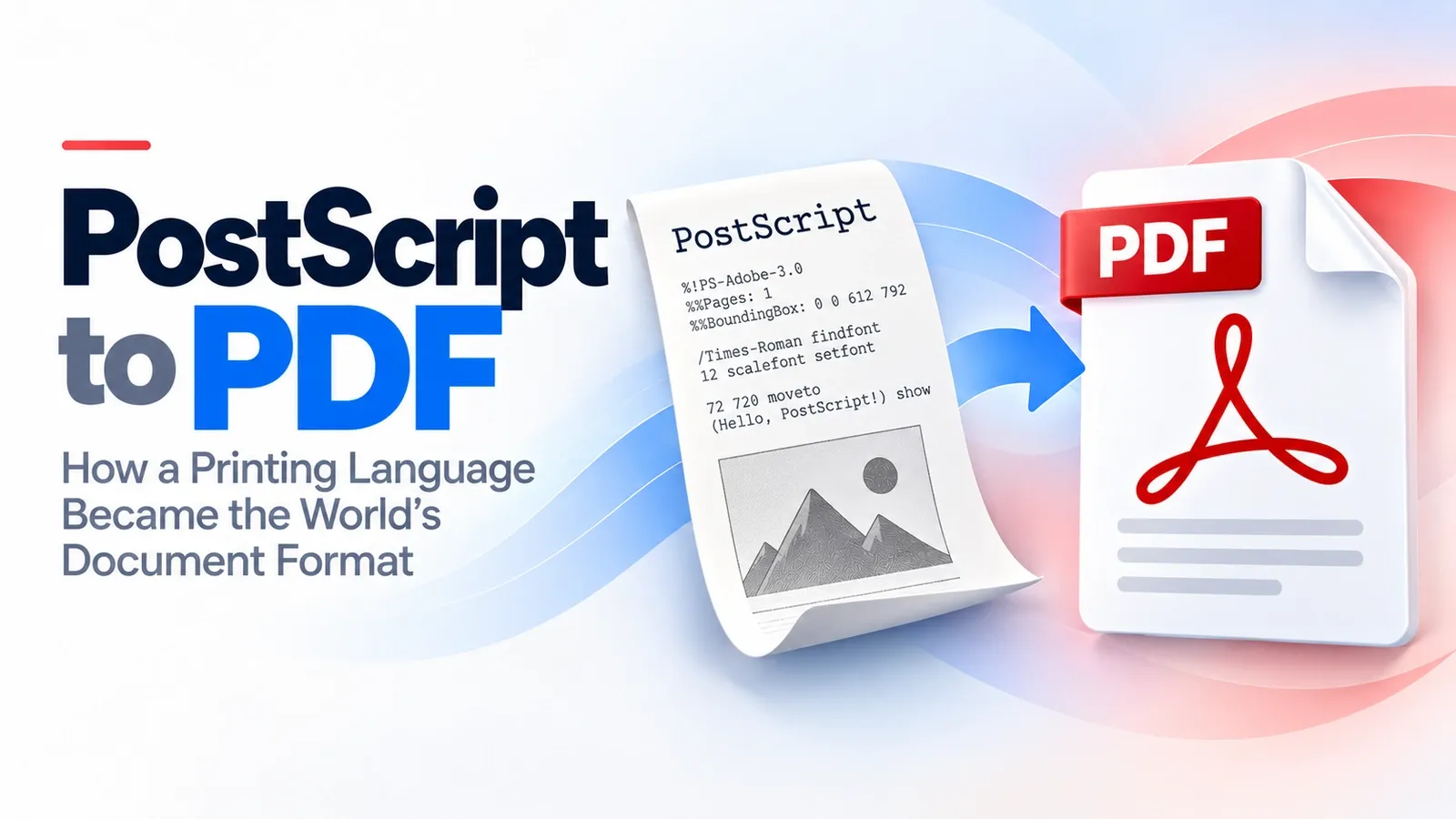
PDF grew out of Adobe’s PostScript printing language, which helped describe how pages should appear before PDF carried that fixed-page idea into a portable document format.
The full origin story belongs in the dedicated PostScript to PDF guide, so this ownership page stays focused on who owns the PDF format today.